

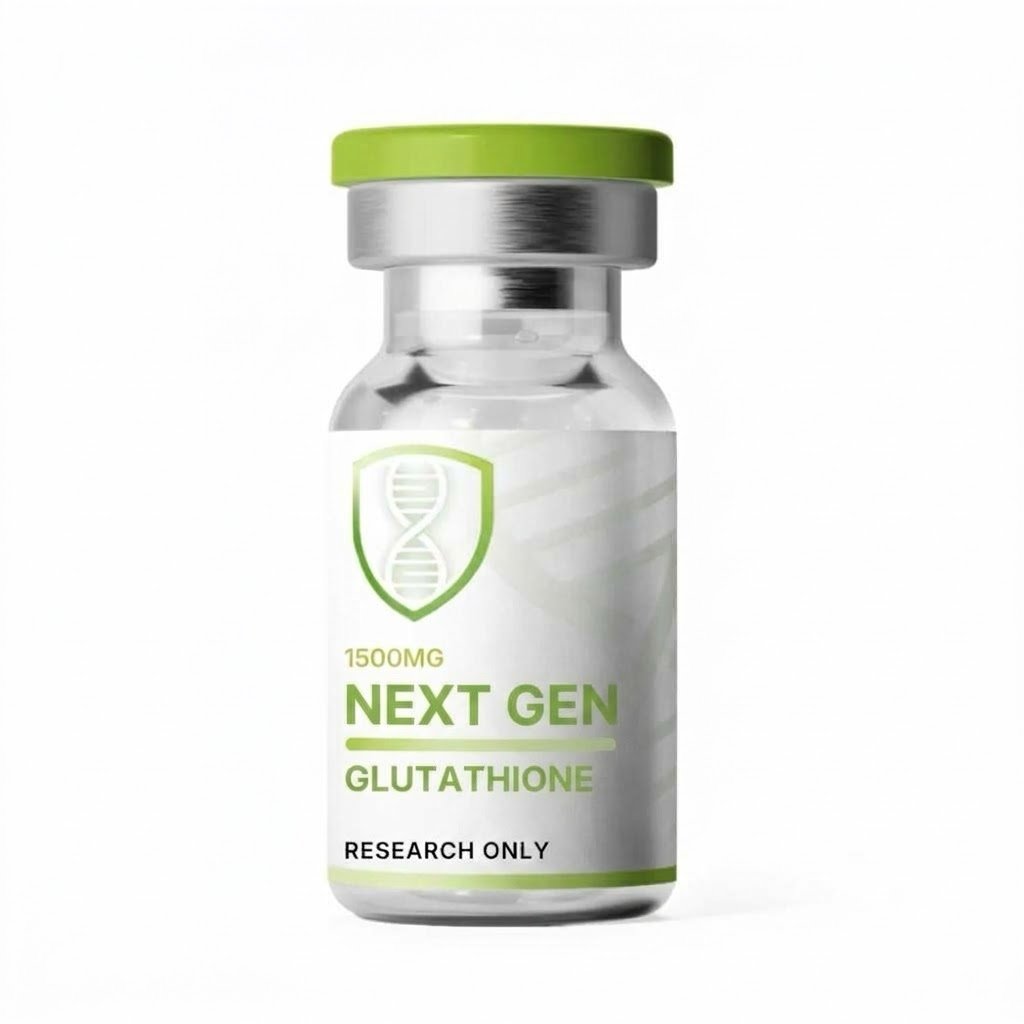
$80.00
Discover the highest purity glutathione 1500mg peptide from a trusted US vendor, engineered for precision laboratory research and advanced scientific applications.
Description
Glutathione 1500mg Peptide: The Gold Standard in Research-Grade Antioxidants
Introduction to Glutathione Peptide and Its Scientific Significance
The scientific community constantly seeks compounds of exceptional purity to push the boundaries of biochemical research. Therefore, among these vital compounds, the glutathione peptide stands out as a critical area of study. Researchers across the globe frequently investigate its complex roles in cellular defense, redox signaling, and enzymatic regulation. Because cellular oxidative stress remains a primary focus in modern molecular biology, laboratories constantly demand reliable access to top-tier biochemicals. When investigating complex cellular pathways, having a dependable source for raw materials is paramount. Consequently, you can explore our complete inventory of catalog options by viewing more or related products / store inventory on our main shop page. Understanding the fundamental nature of this tripeptide ultimately allows researchers to design more accurate, reproducible experimental models.
Understanding the Molecular Composition of Glutathione 1500mg
At its core, this molecule is a low-molecular-weight tripeptide composed of three distinct amino acids: L-glutamate, L-cysteine, and glycine. The unique peptide linkage between the amine group of cysteine and the carboxyl group of the glutamate side-chain gives the molecule its uncommon biochemical resilience. When formulating studies involving cellular detoxification pathways, the glutathione 1500mg dosage format offers exceptional convenience for precise laboratory measurements. According to publications from the National Institutes of Health (NIH), endogenous antioxidants play an essential role in maintaining cellular integrity under various stress conditions. Furthermore, research highlighted by the Cleveland Clinic underscores the physiological importance of maintaining balanced redox states within biological systems. By utilizing a standardized quantity, laboratory technicians can minimize experimental variance and ensure high fidelity across multiple assay replicates.
Why Choose Our Research Grade Glutathione Peptide
Sourcing reliable materials for laboratory experiments requires rigorous quality control and absolute transparency. Our research grade glutathione peptide consistently undergoes stringent third-party analytical testing, including high-performance liquid chromatography (HPLC) and mass spectrometry verification. Laboratories simply cannot afford compromised samples or inconsistent purities that skew analytical results. As a premier US vendor, we proudly maintain strict domestic warehousing standards, temperature-controlled storage environments, and rapid shipping protocols. To secure your laboratory supplies today, you can purchase our flagship compound directly via the Glutathione 1500mg Peptide product page. Our steadfast commitment to scientific excellence ensures that every batch meets the exacting demands of modern academic and private research institutions.
Applications of Glutathione in Advanced Laboratory Research
Investigative protocols involving oxidative stress models frequently incorporate exogenous antioxidant supplementation to observe cellular responses. Researchers frequently analyze how varying concentrations influence mitochondrial function and membrane lipid peroxidation. Clinical reference data maintained by the World Health Organization (WHO) emphasizes the global significance of oxidative stress research in understanding chronic health challenges. Additionally, regulatory frameworks monitored by agencies such as USA.gov and sports governance bodies like the World Anti-Doping Agency (WADA) provide clear guidelines regarding compound classifications and laboratory compliance. By adhering strictly to these standards, researchers ensure that their investigative workflows remain fully transparent and ethically sound. Peer-reviewed literature indexed on platforms like PubMed frequently highlights novel methodologies for quantifying intracellular thiol concentrations, cementing the importance of high-purity standards.
Storage, Handling, and Reconstitution Protocols
Proper laboratory stewardship of lyophilized peptides ensures maximum stability and prevents premature degradation prior to experimentation. Lyophilized peptides should therefore be stored in a desiccated environment at controlled freezing temperatures to preserve their tertiary structures. Before initiating experimental assays, technicians must allow the vial to equilibrate to room temperature to prevent moisture condensation upon opening. Using sterile bacteriostatic water or an appropriate physiological buffer, gently reconstitute the material along the inner walls of the vial rather than forcefully injecting liquid directly into the pellet. Careful handling ultimately guarantees that the structural integrity of the glutathione peptide remains uncompromised throughout your analytical timeline.
Frequently Asked Questions Regarding Research-Grade Peptides
What is the purity level of this peptide?
Our compounds consistently achieve a minimum purity threshold of ninety-nine percent, which is subsequently verified through rigorous independent analytical testing. High purity ensures that your experimental outcomes remain entirely free from confounding impurities or degraded byproducts.
How should lyophilized vials be stored prior to reconstitution?
For optimal long-term stability, store unopened vials in a dedicated freezer at or below negative twenty degrees Celsius. Moreover, protect the compounds from direct exposure to ultraviolet light and excessive moisture.
Are certificates of analysis available for verification?
Yes, every single batch comes with a comprehensive certificate of analysis detailing HPLC purity and mass spectrometry findings. Consequently, this documentation provides your laboratory with the complete traceability required for academic publishing and rigorous peer review.
Reviews